Online 5 Love Languages Test for Couples & Kids
What the Five Love Languages Mean and Why They Matter
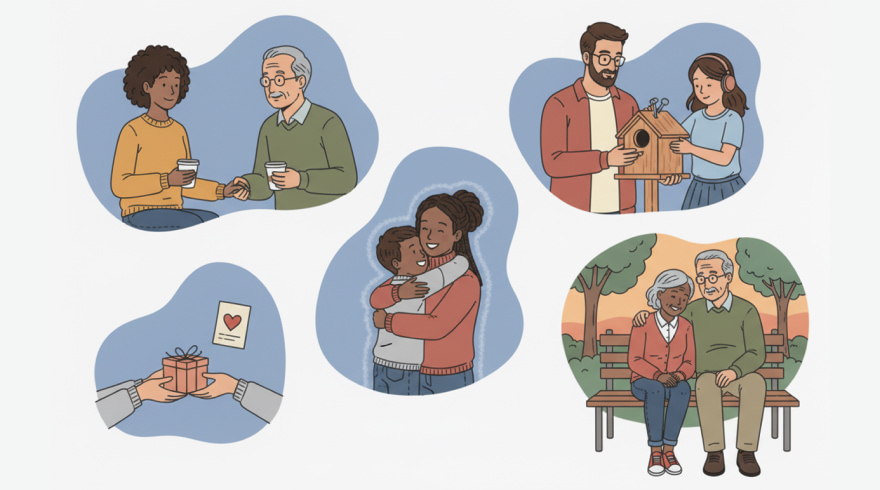
The five love languages offer a practical framework for understanding how people naturally express and receive love. Instead of assuming that affection looks the same for everyone, the model invites you to observe patterns, translate intentions, and personalize your expressions of care. Couples, families, and friends can use this shared vocabulary to reduce confusion, align expectations, and make daily connection feel easier and more meaningful.
Originally developed from years of counseling, the framework reframes affection as a set of observable behaviors you can choose intentionally. In many modern relationships, the language you default to may not be the one your partner values most, which is why the insight from 5 love languages by Gary Chapman remains so sticky and widely referenced. By shifting from guesswork to thoughtful experiments, you create a cycle of small wins that strengthens trust and emotional safety over time.
Understanding the concept is one step, and practicing it consistently is another. A guided assessment can accelerate learning by narrowing your focus to a few high-impact actions, which is why many readers appreciate the structure of the Gary Chapman 5 love languages test in the early stages. From there, you can design rituals, track outcomes together, and iterate based on what genuinely lands for your partner in real life.
- Words of Affirmation focus on verbal appreciation and encouragement.
- Quality Time emphasizes presence, attention, and shared experiences.
- Receiving Gifts centers on thoughtful tokens that symbolize care.
- Acts of Service highlight helpful actions that lighten someone’s load.
- Physical Touch prioritizes comforting, consensual contact to feel secure.
The Five Languages Explained with Examples and a Handy Comparison
Each language channels a distinct way of signaling value, and all of them can contribute to a balanced connection. When you know which channel resonates most, everyday choices become targeted and more effective. If you’re analyzing your patterns and want structured prompts to clarify your tendencies, the guided items in 5 love languages test chapman can reveal surprising blind spots you might otherwise miss.
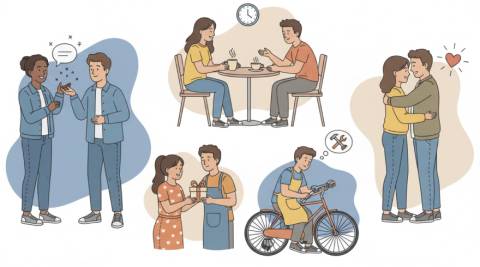
Words of Affirmation might sound like specific praise after a long day, while Quality Time could be an uninterrupted walk or device-free dinner. Receiving Gifts doesn’t have to be expensive; a handwritten note or a favorite snack can carry real emotional weight. If you prefer Acts of Service, a partner doing chores without being asked may feel incredibly loving, and Physical Touch could be a reassuring hug during stressful moments, which tools like Gary Chapman's 5 love languages test help you pinpoint with clarity.
| Language | Micro-behaviors | Common Pitfalls | Quick Starter Idea |
| Words of Affirmation | Specific compliments, gratitude notes, vocal encouragement | Generic praise, backhanded comments, sarcasm under stress | Send a 3-sentence text detailing what you appreciated today |
| Quality Time | Eye contact, active listening, distraction-free time | Multitasking, constant phone use, frequent interruptions | Schedule a 25-minute walk-and-talk after work |
| Receiving Gifts | Thoughtful tokens, symbolic mementos, surprise favorites | Extravagance over meaning, last-minute generic items | Keep a note of future gift ideas based on daily hints |
| Acts of Service | Errands, chores, logistics help, practical support | Doing tasks without consent, expecting praise each time | Pick one recurring task to own every week |
| Physical Touch | Hugs, hand-holding, cuddling, reassuring pats | Assuming touch is always welcome, ignoring context | Ask for consent and create a “comfort touch” ritual |
As you explore, remember that everyone holds a blend of preferences, and context matters. Stress, life transitions, and cultural norms can change how needs show up day to day. With shared language and curiosity, you can calibrate habits together, reduce friction, and nurture a relationship that feels uniquely yours. For a concise overview you can take together, try the Gary Chapman 5 love languages quiz.
Benefits That Strengthen Couples, Families, and Even Work Relationships
Aligning love languages tends to create faster repairs after conflict and more consistent moments of connection. When both people feel seen in the specific ways that matter to them, defensiveness drops and generosity rises. In many cases, people also report better boundaries, because the framework helps them ask more clearly for what they need, a process that can be jump-started by insights similar to those found in 5 love languages quiz by Chapman.
Beyond romance, the model supports friendships and family dynamics by clarifying how different people prefer support. Caregiving gets easier when everyone can point to concrete actions that feel nourishing, rather than relying on assumptions. For tracking progress or building shared habits, some partners appreciate data-driven nudges they glean from resources comparable to 5 love language test Gary Chapman, and they combine those insights with weekly check-ins that keep momentum steady.
- Clearer communication reduces misinterpretations and hidden resentment.
- Personalized rituals create predictable warmth and stability.
- Repair conversations get shorter because needs are named specifically.
- Trust grows as partners keep promises in each other’s preferred language.
- Small daily wins compound into long-term relationship satisfaction.
Finding Your Primary Language and Tracking Growth Over Time
Discovery works best when it feels playful, curious, and low pressure. Start by noticing which gestures give you energy and which ones fall flat, then validate those hunches together. If you want a simple entry point complete with ready-made prompts, many readers reference resources similar to 5 love languages Gary Chapman quiz as a starting line, followed by short experiments to confirm results in real life.
Calibrate your expressions in small increments, then review what worked each week and iterate from there. For more structured insight, some couples compare notes using assessments akin to 5 love languages test Gary Chapman, and they use the outputs to design two or three repeatable habits that fit their routines. The key is consistency: choose actions you can reliably deliver, so trust grows with every follow-through.
- Journal brief notes after meaningful interactions to spot patterns.
- Agree on one weekly ritual aligned with the top language.
- Use check-ins to refine, not to judge; curiosity beats criticism.
- Retake an assessment after life changes to see if preferences shifted.
Communication Strategies, Common Mistakes, and Real-Life Application
Even with the right framework, execution matters. Describe your needs with examples, not accusations, and request specific behaviors that are easy to deliver. For accountability and gentle structure, some people like to revisit brief prompts inspired by tools such as 5 love language quiz Gary Chapman, then turn those insights into calendar-friendly rituals that fit their season of life.
Avoid assuming your partner will decode hints or “just know” what you want, and resist ranking languages as better or worse. You’ll get further by appreciating differences and building a reliable mix that honors both people. When you want a quick refresher that sparks new ideas, it can help to consult summaries reminiscent of Gary Chapman 5 love language quiz and then brainstorm two-minute actions you can try tonight.
- Translate vague praise into specific, concrete appreciation.
- Trade uninterrupted time blocks when life gets busy.
- Keep a shared list of simple, meaningful gift ideas.
- Volunteer for a recurring task as a stress buffer.
- Ask for consent and context before initiating touch.
Faq: Practical Answers About the Five Love Languages
Do people have only one love language?
Most people have a dominant preference and a secondary style, and both can shift with life stage, stress, or context. It’s normal to appreciate all five; the goal is to prioritize the ones that deliver the biggest emotional return for you and your partner.
How often should couples revisit their languages?
Revisit them whenever the relationship context changes, such as after a move, new job, or family milestone. A quick quarterly check-in is useful, and after major transitions, a deeper conversation helps reset expectations and habits in a supportive way.
Are the languages useful for friendships and family?
Yes, because the framework translates easily into non-romantic settings. For example, a sibling may value help with errands, while a friend might cherish intentional time, which mirrors the same principles in a way that fits those relationships.
Where can I start if I have limited time?
You can begin with one tiny daily action that aligns with your top language and one weekly habit that supports your partner, which is why quick prompts similar to 5 love languages quiz Gary Chapman are handy for momentum. Small, consistent steps beat grand gestures you can’t sustain.
What if our results don’t match?
That mismatch is common and manageable through explicit trade-offs and routine-based experiments, and many couples find value in revisiting brief assessments like Gary Chapman 5 love languages quiz to spark fresh ideas. The secret is negotiating a balanced mix so both people feel seen.