Online 5 Love Languages Test for Couples & Kids
What This Test Means and Why It Endures
Understanding how people express and receive affection transforms relationships at every stage. In many households, the framework known as the 5 love languages provides a shared vocabulary that reduces guesswork and builds empathy. Rather than assuming others want love delivered the way we prefer, this lens helps us tailor expressions with greater precision and warmth.
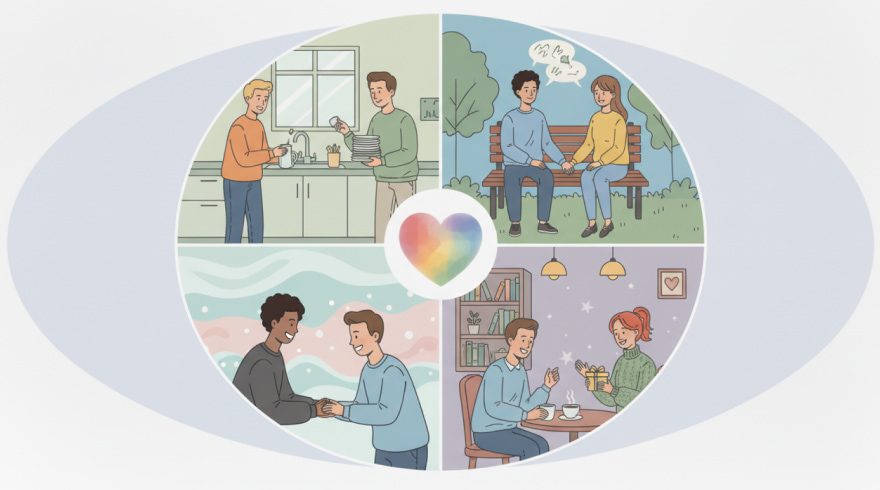
The model distills everyday caring behaviors into five clear categories, making emotional needs easier to identify and honor. For quick reference during conversations or journaling, many readers keep a personal note card that summarizes the list of 5 love languages so they can match actions to needs consistently. With repetition, choosing the right expression becomes instinctive rather than effortful.
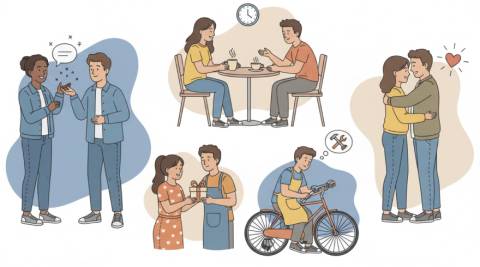
To make the big ideas tangible, the comparison below outlines the five categories, typical signals, and common pitfalls to avoid when expressing care across different personalities.
| Language | What it looks like | Pitfall to avoid |
| Words of Affirmation | Sincere praise, gratitude, and encouragement | Generic compliments that feel scripted |
| Quality Time | Undistracted presence and attentive listening | Multitasking during “together” moments |
| Acts of Service | Thoughtful help that reduces burdens | Doing tasks no one asked for, then expecting credit |
| Receiving Gifts | Meaningful tokens that symbolize care | Focusing on price over personal significance |
| Physical Touch | Comforting, consensual contact and closeness | Ignoring boundaries or assuming touch is always welcome |
As you reflect, notice the patterns you default to under stress or celebration, then compare them with the needs of the people you love. With a bit of practice, you can swap mismatched gestures for ones that feel unmistakably supportive.
Relationship Benefits Backed by Clear Communication
Couples and families who use a shared emotional vocabulary report less friction and faster repairs after misunderstandings. Research-backed communication frameworks like the love languages 5 model help partners pinpoint needs without spiraling into blame or defensiveness. When each person sees how specific behaviors fill the other’s “emotional tank,” small daily moments become powerful investments.
Therapists often recommend this approach because it’s simple enough to implement yet deep enough to reveal habits that keep bonds stagnant. In clinical practice, the insights credited to 5 love languages by Gary Chapman continue to spark practical, compassionate changes in households worldwide. While no single tool replaces empathy or accountability, a shared map dramatically shortens the path to mutual understanding.
- Less mind-reading: people ask for care in concrete terms.
- Fewer recurring arguments: triggers get context and alternatives.
- Stronger trust: follow-through matches stated needs.
- Greater resilience: repairs happen faster and last longer.
- Deeper intimacy: attention is personalized instead of generic.
How to Discover Your Primary Style and Preferences
Clarity starts with noticing what makes you feel most seen on an ordinary day. Many people begin with a brief self-assessment, and the results from the 5 love languages quiz can spotlight patterns you might overlook. Invite someone close to take the same assessment, then compare answers to see where your gestures land with them.
No single tool captures the whole picture, so combine reflection with observation over several weeks. For structured insight, an inventory such as the 5 love languages test offers a snapshot you can revisit as life circumstances evolve. Treat any score as a conversation starter rather than a fixed label, and track which gestures consistently lift your mood.
- Journal one sentence daily about which gesture meant the most.
- Ask, “What would make the next week feel easier?”
- Experiment with one new gesture per day and note the response.
- Review patterns each month and adjust your approach.
Applying the Framework With Couples and Families
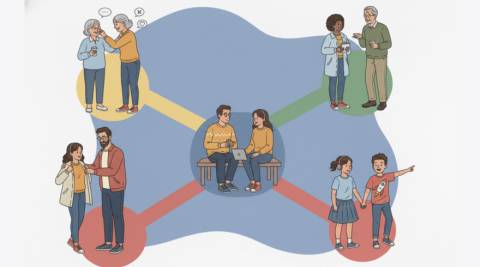
Romantic partners often discover that their habitual ways of showing care miss the mark for the other person. For shared discovery and playful accountability, many pairs schedule a check-in after using the 5 love languages quiz couples and then plan small, weeklong experiments. Because change sticks best in bite-sized steps, even one intentional gesture per day can shift the tone of a relationship.
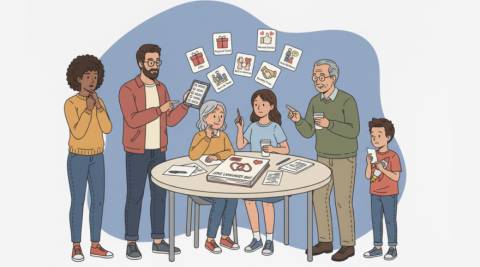
Caregivers can tailor affection to a child’s developmental stage with lively, age-appropriate gestures. Parents often find creative ideas by exploring resources that highlight the 5 love languages for kids in simple, concrete examples. The goal is not to box a child into a category but to offer a wider menu of ways to feel loved and secure.
- For partners: trade “micro-gestures” lists and rotate ideas weekly.
- For families: create a jar of caring actions each person can pull from.
- For all ages: celebrate progress, not perfection, to keep momentum.
Bringing These Ideas to Workplaces and Schools
Teams function better when appreciation is expressed in ways people actually value, especially in hybrid or remote environments. Managers sometimes introduce a light-touch check-in inspired by the 5 love languages workplace quiz to clarify what recognition looks like for each teammate. The result is more targeted praise, more helpful support, and fewer missed signals.
Educators and counselors can adapt the language thoughtfully for adolescents who crave respect and autonomy. Many schools integrate a structured reflection similar to the 5 love languages test for teens to spur conversations about boundaries, consent, and self-advocacy. Whether at a locker or a lab bench, young people benefit when care is communicated clearly and consistently.
- Offer appreciation in the format people request, not what you prefer.
- Use opt-in surveys to protect privacy and comfort.
- Revisit preferences during transitions, promotions, or new terms.
Faq: Clear Answers to Common Questions
What is the core idea behind this framework?
The core idea is that people feel cared for in different, identifiable ways, and that mapping those preferences cuts down on friction. By turning vague desires into observable behaviors, partners and families can act with precision.
Can someone have more than one primary style?
Yes, many people show a strong primary with a close secondary that shifts based on stress, health, or life stage. Treat the categories as guiding patterns rather than rigid labels, and stay curious as needs evolve.
Do preferences change over time?
They often do, particularly after major milestones such as moving, parenting, or career pivots. Reassess regularly and ask for feedback so your expressions of care keep pace with the person you love.
How can I explore my style without spending money?
You can begin by journaling reactions to specific gestures and asking a trusted friend for observations about what lifts you up. When budget is a barrier, the 5 love languages quiz free options online offer a quick, low-friction starting point for reflection. Follow up with intentional experiments to validate what the results suggest.
What about teens and school settings?
Teens thrive when adults validate autonomy, invite input, and respect boundaries while offering consistent care. Many high schools add the 5 love languages test teens to advisory sessions as a self-awareness activity that pairs well with discussions about consent and communication. The emphasis is on choice, clarity, and mutual respect as skills for life.