5 Love Languages Test by Gary Chapman

Are You Loving the Right Way?

What Five Love Languages Test Is and Why It Still Matters

Relationships thrive when partners can translate intention into impact, and this framework gives practical vocabulary for that translation. Within everyday conversations, the 5 love languages concept now acts like a map for decoding care without guessing or keeping score. Rather than prescribing one “right” way to connect, the idea highlights multiple valid pathways, which reduces defensiveness and promotes curiosity. Over time, that shared vocabulary shortens conflict cycles and boosts positive attention, making small gestures land with outsized meaning.

Cross-Cultural Use

Origins matter because language shapes how we use a model in real life. For popular readers, credit often goes to 5 love languages by Gary Chapman for packaging the ideas with memorable labels and usable stories. Practitioners later built on the approach with exercises, journals, and therapeutic prompts, while researchers explored overlaps with attachment, gratitude, and prosocial behavior. The ongoing relevance comes from how flexible the framework is across cultures, ages, and contexts, allowing people to personalize it without losing clarity.

Cross-Cultural Use
It converts vague needs into specific, observable behaviors that can be practiced daily.
It normalizes differences, which reduces blame and increases empathy during tough moments.
It creates a shared glossary, making communication faster and less reactive.

The Core Languages, Explained With Nuance

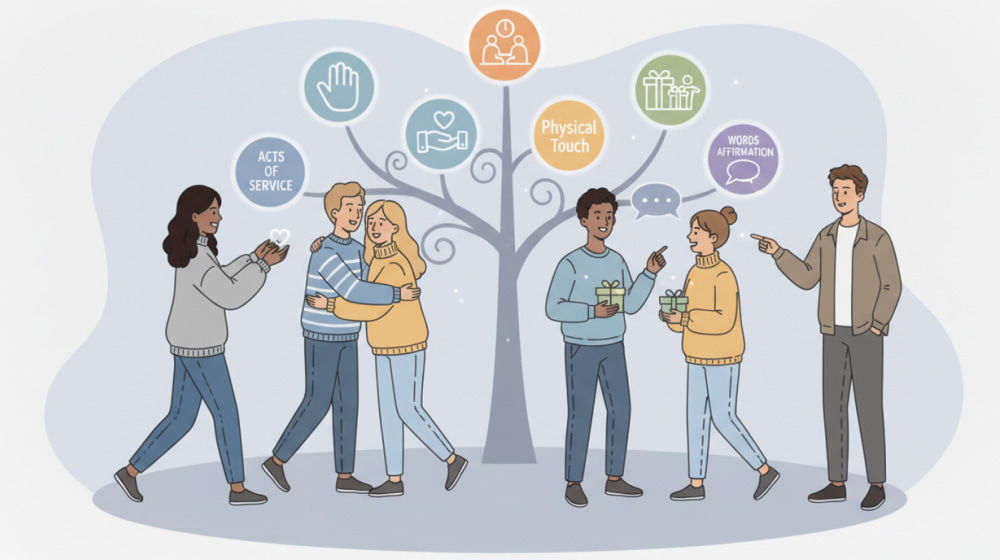
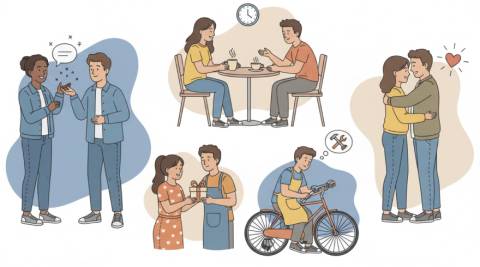
At first glance the framework seems simple, yet its power shows up in the details and the fit to real lives. At its core, the model outlines 5 types of love language that describe how people naturally send and receive affection across everyday moments. Each language contains a spectrum of behaviors, from subtle micro-acts to signature expressions, and your preferences can vary by context. Understanding these gradients helps you choose actions that feel authentic rather than scripted.

People often ask where to begin, and a clear inventory makes the first steps more confident. To make the landscape concrete, a concise list of 5 love languages helps readers match examples to practice and align gestures with needs. As you experiment, track which actions produce uplift versus indifference, because outcomes guide personalization better than assumptions. Misunderstandings tend to fade when nuance is embraced rather than avoided. In real relationships, awareness that love languages 5 map to overlapping needs helps you blend strategies without forcing a single lane. That blending matters on big days, like anniversaries or reunions, but it matters even more during ordinary weeks, where consistent small signals build trust.

Applying the Model in Relationships, Families, and Teams

Application turns insight into momentum, so start small and iterate as you learn what lands. For partners, a thoughtfully designed 5 love languages quiz couples can spark dialogue about mismatched expectations and inspire new weekly rituals. You can combine scheduled check-ins with spontaneous gestures, and you can align routines, like errands or mealtime, to double as connection opportunities. Keep a short list of go-to actions for busy days, then expand it during calmer seasons.

Context What to Notice Practical Micro-Action
Romantic Partnership Which gestures create visible relaxation or enthusiasm Plan a distraction-free 20-minute check-in with a specific prompt
Parenting Times of day when reassurance or energy runs low Create a short after-school ritual paired with a playful question
Friendships Preferred ways of celebrating wins or soothing losses Send a voice note that names one concrete strength you noticed
Workplace Colleagues’ appreciation preferences and boundaries Offer precise feedback plus one barrier-removing favor this week

Work settings can benefit when appreciation gets as much design as feedback and goals. Inside organizations, a respectful 5 love languages workplace quiz reframes collaboration through appreciation styles while keeping professionalism and consent central. Managers who learn this vocabulary often improve recognition systems, mentorship matches, and onboarding, which supports performance and wellbeing together. Personal growth accelerates when reflection keeps pace with action, so track what works and adjust. For individual reflection, a short 5 love language quiz often reveals surprising blind spots and strengths that you can immediately apply to daily routines. Keep notes on energy, mood, and connection quality, and revisit your plan monthly to refine your mix of gestures.

Schedule recurring micro-rituals that are easy to keep during busy seasons.
Pair gestures with context cues, like commute times or weekly planning blocks.
Ask for feedback in concrete terms, then iterate without defensiveness.

Benefits Backed by Psychology and Practice

Most couples don’t lack caring; they lack translation between intent and impact, and that’s where this framework shines. In families, resources themed around 5 love languages for kids can translate abstract ideas into concrete routines that feel playful and age-appropriate. Caregivers then gain a toolkit for bedtime rituals, learning encouragement, and conflict recovery that respects developmental stages. Over months, those routines reduce friction and create reliable signals of safety and belonging.

Adolescents navigate identity, autonomy, and intense emotion while still learning co-regulation, so guidance must be clear and respectful. During adolescence, a curated 5 love languages test for teens can open conversations about boundaries and expression without pathologizing natural changes. Schools and youth programs benefit as well, because appreciation literacy supports peer empathy, helps prevent misunderstandings, and encourages prosocial norms. Across ages, the shared vocabulary and repeatable practices turn empathy into action, which sustains motivation far better than rules alone.

Discovery As a Process

Discovery is a process, not a one-time label, so blend quick scans with deeper reflection. For a snapshot, an accessible 5 love languages quiz offers quick pattern recognition without heavy theory or jargon. Use those initial results to hypothesize two or three experiments for the next week, then note which ones create the most positive resonance.

Discovery As a Process

Combining Test Results With Reflection

When the stakes are higher, you may want more structure and cross-checking across contexts. When you want rigor, a longer 5 love languages test allows deeper cross-checking across scenarios like stress, celebration, and routine days. Combine results with journaling prompts that explore history, boundaries, and current life demands for a comprehensive picture. Budget and access can shape your first steps, but quality still matters for usefulness. If budget matters, a reputable 5 love languages quiz free can be a fine starting point before coaching or therapy adds a tailored plan. Treat every result as a working hypothesis, and re-test or re-evaluate after major life changes such as a move, new job, or parenthood.

Common Mistakes and Myths to Avoid

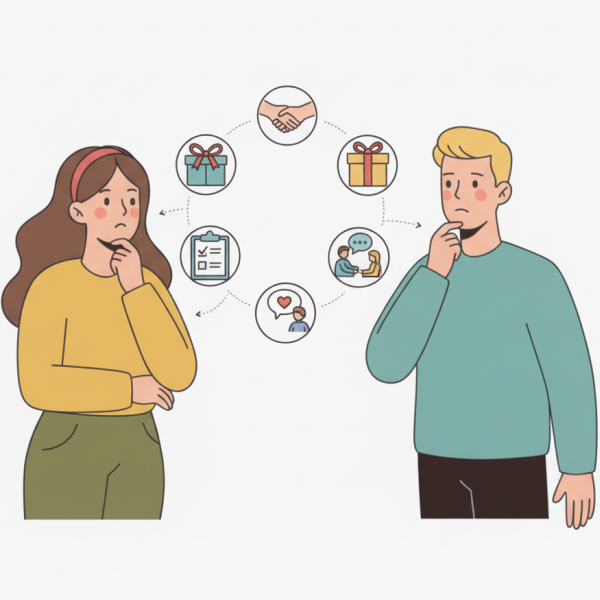
Popular tools can be oversimplified, so a bit of skepticism is healthy and productive. A common misconception is that a single 5 love language will remain fixed forever, regardless of context or life stage. In practice, preferences shift with stress, health, cultural settings, and relationship history, which is why ongoing dialogue matters more than labels. Another pitfall is treating any instrument as a diagnostic verdict rather than a conversation starter. Another myth assumes any generic 5 love language test is inherently scientific, which oversimplifies measurement and ignores validation standards. Treat assessments as directional compasses, then verify insights through lived experience and feedback from trusted people. That combination keeps the framework grounded, humane, and genuinely useful.

Don’t weaponize labels during conflict; instead, request specific behaviors with kindness.
Avoid assuming your preferred expressions will land equally well for others.
Revisit preferences after major transitions to prevent stale assumptions.
Online 5 Love Languages Test for Couples & Kids

Frequently Asked Questions

How do I figure out my primary and secondary styles?
Start with a brief self-assessment to generate hypotheses, then test two or three behaviors across ordinary days. Compare your internal sense of connection with observable outcomes, and keep what consistently works.
Can my preferences change over time?
Yes, shifts are common during life transitions, stress, or healing. Reassess periodically, and treat your plan as a living document that evolves with your circumstances.
What if my partner and I value different expressions?
Differences are normal, and translation is the skill to build together. Pick one small action from each person’s preference list, schedule them, and review how they land after a week.
Is this approach useful at work without crossing boundaries?
Absolutely, as long as consent, professionalism, and clarity guide the process. Focus on recognition, practical support, and clear communication norms rather than intimate expressions.
How can parents use this framework with children?
Keep practices simple, frequent, and developmentally appropriate, and observe which gestures soothe or energize. Build brief rituals around daily transitions, and adjust as the child’s needs and maturity evolve.

The Latest News

Decode How You Give and Receive Affection: an Expert Guide to the Five Love Languages
Online 5 Love Languages Test for Couples & Kids Get Started What the Framework Means and Why a Quiz Works At its core, the Five Love Languages framework explains the recurring ways people express care and interpret closeness: Words of Affirmation, Quality Time, Acts of Service, Re...
Comprehensive Guide to the 5 Love Languages Assessment
Online 5 Love Languages Test for Couples & Kids Get Started What the Framework Means and Why It Still Matters Love often feels intuitive, yet relationships thrive when partners decode how affection is best sent and received. The five-language framework, popularized by counselor an...
Unlock Deeper Bonds With This Comprehensive Guide to Free Love Language Quizzes
Online 5 Love Languages Test for Couples & Kids Get Started What Are the Five Love Languages and Why They Matter Relationships flourish when partners understand how each person prefers to give and receive care. That understanding becomes clearer when you examine the distinct tende...

Please Note

This website (5lovelanguagestest.us) is not an official representative, creator or developer of this application, game, or product. All the copyrighted materials belong to their respective owners. All the content on this website is used for educational and informative purposes only.